
Dynalene’s professional team can provide fast, economical and reliable solutions to meet challenges of different industries. Dynalene performs testing such as:
- Material Compatibility
- Stability
- Failure Analysis
Please contact us to find out more on how we can help you to fight corrosion.
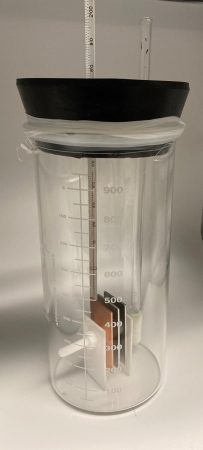
NEW ASTM D8485 Standard Test Method – Corrosion Test for Electric Vehicle Coolants
This test method is a glassware procedure to evaluate the effects of glycol based electric vehicle coolants on Metals.
Test your fuel cells, electric vehicles (EV), batteries, charging stations, and motor coolants for corrosion on Aluminum, Stainless Steel and Copper.
Looking to buy Low Electrical Conductivity fluids for electric vehicles (EV), fuel cells, batteries, charging stations, etc. Click here.
Compatibility Testing
Materials come in contact with aggressive and corrosive environment during various application and service conditions. Materials selection is very important as materials can corrode or fail when exposed to chemicals, oxidizing or corroding agents, heat-transfer fluids, coolants, etc. at high temperature and pressure. Material compatibility is analyzed via different tests including immersion testing and testing in simulated environment.
Thermal Stability:
Materials often need to perform at high temperatures. Understanding the thermal stability of materials will provide valuable insight into choosing the right materials for your process or assist in trouble shooting system failures. Dynalene can evaluate the performance parameters you need for your process to operate at maximum efficiency. Techniques include but are not limited to GC/MS, Viscosity, Acid Number, Phase Transition, Microstructure analysis, FTIR and Non Volatile Residue.
Failure Analysis:
Materials failure is commonly caused by service, design and processing conditions /errors. The mechanism or combination of mechanisms that leads to failure are corrosion, stress corrosion cracking, fatigue, fracture, creep and hydrogen and liquid metal embrittlement. Visual inspection both at low and high magnification is done by both optical microscope and SEM. EDS inspection of the specimen surface leads to the identification of inclusions, segregation and elemental mapping helps in identifying the possible location and concentration.
Dynalene’s in-house SEM with EDS and optical microscope can characterize your pre and post-processed metals/polymer/ceramics and our GC/MS and HPLC can analyze the fluids before and after testing. Dynalene can help you analyze what’s causing your material to fail. With a variety of materials evaluation techniques, we can assist in possible failure analysis including:
- Type of fracture and direction of crack propagation
- Type of stress
- Identifying unsuitable service or repair condition
- Presence of manufacturing defects
- Chemical composition and location of foreign particles or inclusions